
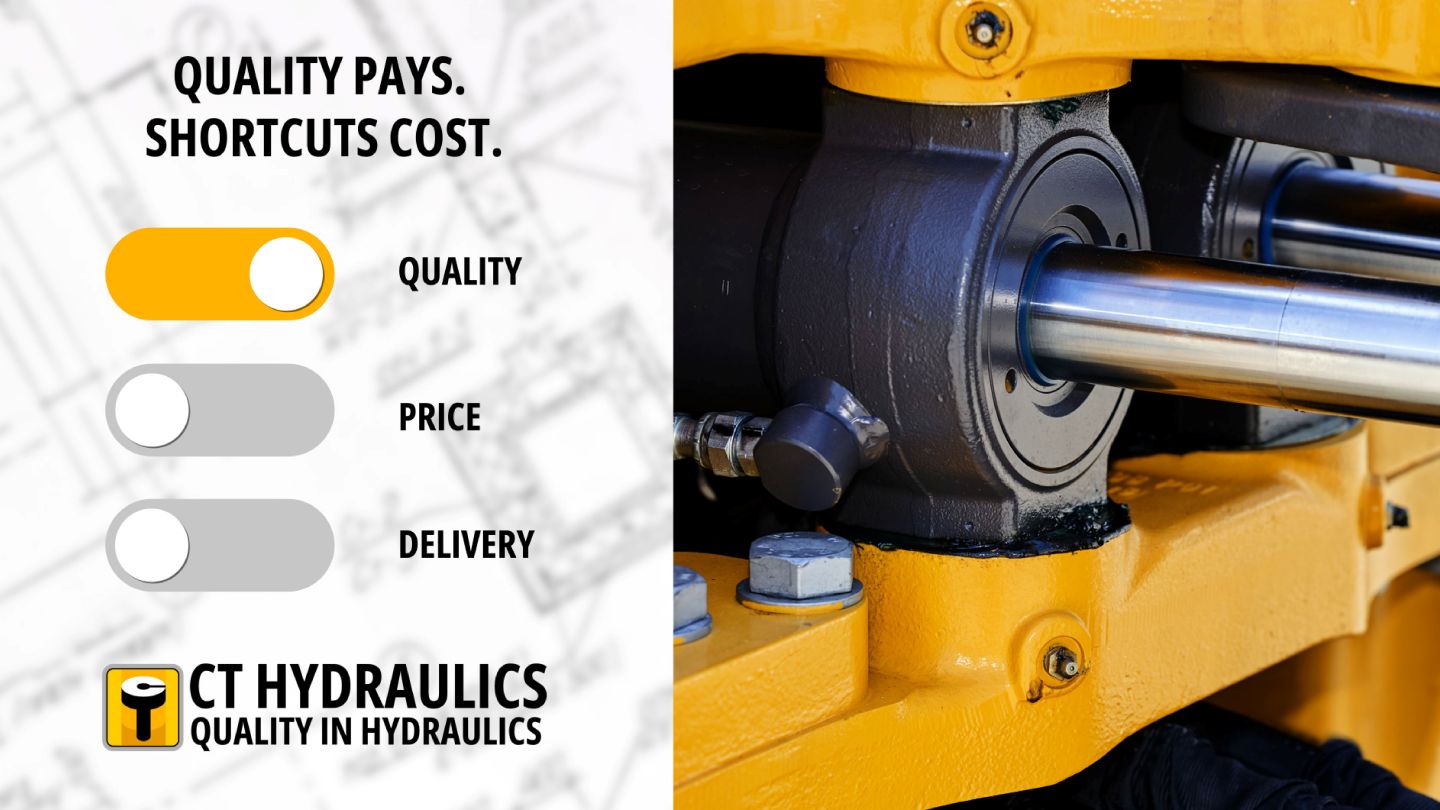
In the demanding environments of South African mining, marine, and earthmoving sectors, operational pressure is a constant. When a critical hydraulic component fails on a remote site in the Northern Cape or a vessel docked in Durban, the immediate reaction is often a frantic search for the fastest delivery or the lowest repair quote.
However, this urgency often leads decision-makers directly into a classic industrial trap: the Quality, Delivery, and Price Trilemma.
Understanding the Trilemma: Why You Can’t Have It All
The Trilemma is an economic reality in engineering. It suggests that among Quality, Price, and Delivery, a service provider can realistically only excel at two while compromising the third.
- Fast and Cheap: Usually results in poor quality, leading to premature failure.
- Fast and High Quality: Comes with a premium price tag to cover express logistics and overtime.
- High Quality and Low Price: Requires longer lead times to allow for cost-efficient sourcing and meticulous engineering.
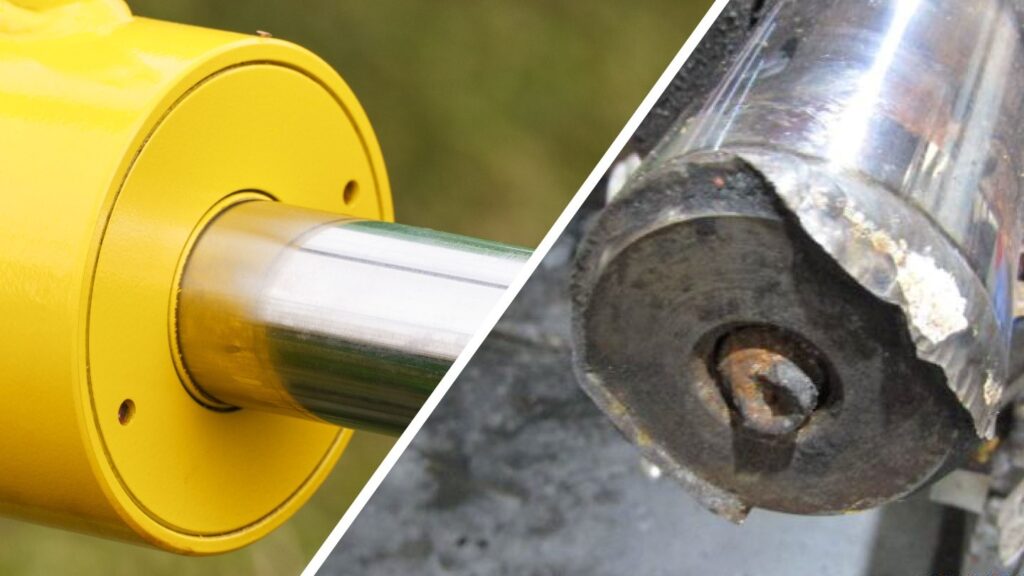
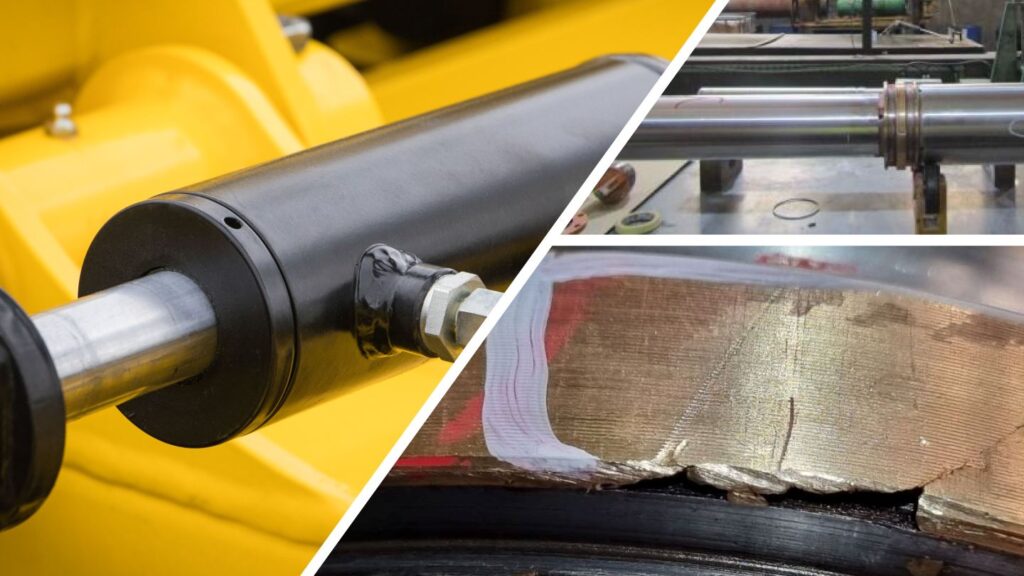
At CT Hydraulics, we have seen the aftermath of choosing the fast-and-cheap route. Our detailed failure reporting often reveals broken rod clevises, cracked welding, contaminated fluids, and burst housings – all symptoms of a quick fix that failed under the intense duty cycles of South African heavy industry. To truly achieve Quality in Hydraulics, one must understand that the lowest upfront price is almost always the most expensive choice in the long run.
The Hidden Financial Impact of Budget Hydraulics
The South African market is currently facing significant logistics and energy pressures. In 2026, the cost of unplanned downtime on a Tier 1 mine can reach hundreds of thousands of Rands per hour. When you compare this to the marginal savings of a cheaper hydraulic pump or a rushed cylinder reconditioning, the math simply does not add up.
The technical reality of Quality, Price, and Delivery in Hydraulics involves several critical factors:
- Material Integrity: Cheap components often use inferior alloys that cannot withstand the pressure spikes common in earthmoving applications.
- Precision Machining: Quality in Hydraulics requires OEM-standard tolerances. Even a micron-level deviation in a piston’s surface finish can cause seal degradation within weeks.
Technical Comparison: Reconditioning vs. Quick Repairs
Many service providers offer a repair which essentially replaces only the visibly broken parts. While this offers a low price and fast delivery, it ignores the root cause of the failure.
| Feature | Quick Budget Repair | CT Hydraulics Quality Reconditioning |
| Component Inspection | Visual check only | Full strip-down & micrometre measurement |
| Parts Used | Aftermarket/Generic | OEM-standard or superior materials |
| Testing | Basic function test | Comprehensive pressure & bypass testing |
| Failure Analysis | None provided | Detailed Failure Reporting |
| Expected Lifespan | Unpredictable; high risk | Extended, warranty-backed reliability |
By focusing on Quality, Price, and Delivery in Hydraulics through a lens of long-term ROI, we help our clients move away from reactive maintenance. Our approach ensures that when a component leaves our workshop, it isn’t just fixed – it is restored to a state that can withstand the harshest African environments. This process is often a more sustainable and cost-effective alternative when considering reconditioning vs. replacing hydraulic cylinders.
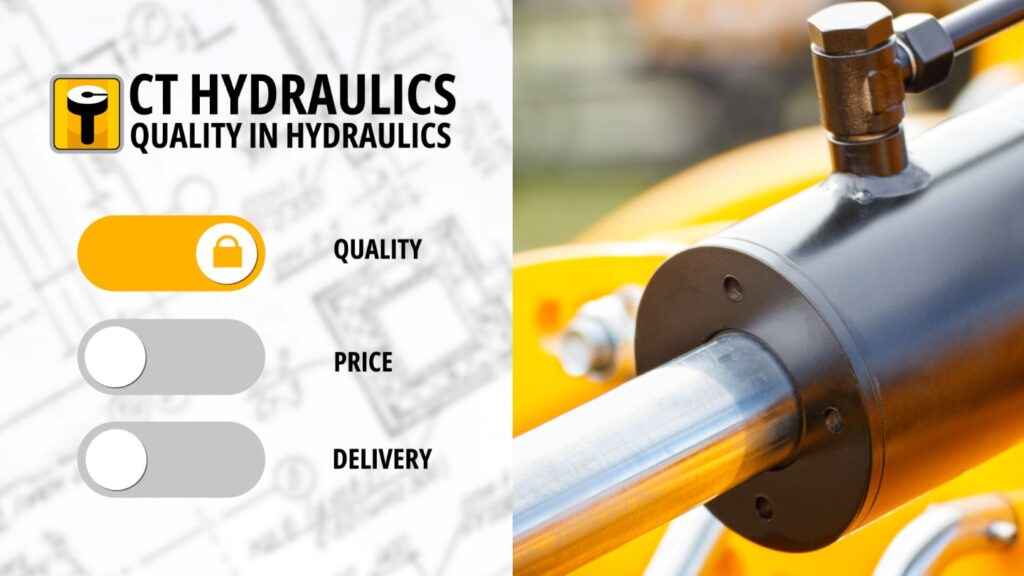
The Value Proposition: Why Quality in Hydraulics is the Only Sustainable Choice
Investing in high-standard hydraulics offers three primary returns on investment:
- Reduced Total Cost of Ownership (TCO): A high-quality component may cost 20% more upfront but last 300% longer than a budget alternative.
- Enhanced Safety: In marine and mining, a hydraulic failure isn’t just a financial risk; it’s a safety hazard. Proper reconditioning ensures load-holding valves and seals perform exactly as designed.
- Predictability: When you prioritise Quality in Hydraulics, your maintenance cycles become predictable. You stop fighting fires and start managing assets.
Choosing between price, speed, and quality is the ultimate industry trilemma. In these examples below, we explore why cheap and fast is often the most expensive mistake a mine or site manager can make. Here are some real-world failure reports to show the difference between a quick fix and Quality in Hydraulics:
Take Control of Your Equipment’s Lifespan
Don’t let the trilemma compromise your operations. If you are tired of repeated failures and escalating downtime costs, it is time to partner with a team that understands the technical nuances of the South African industrial landscape.
Visit CT Hydraulics today or book a consultation with our sales team to switch to Quality.