
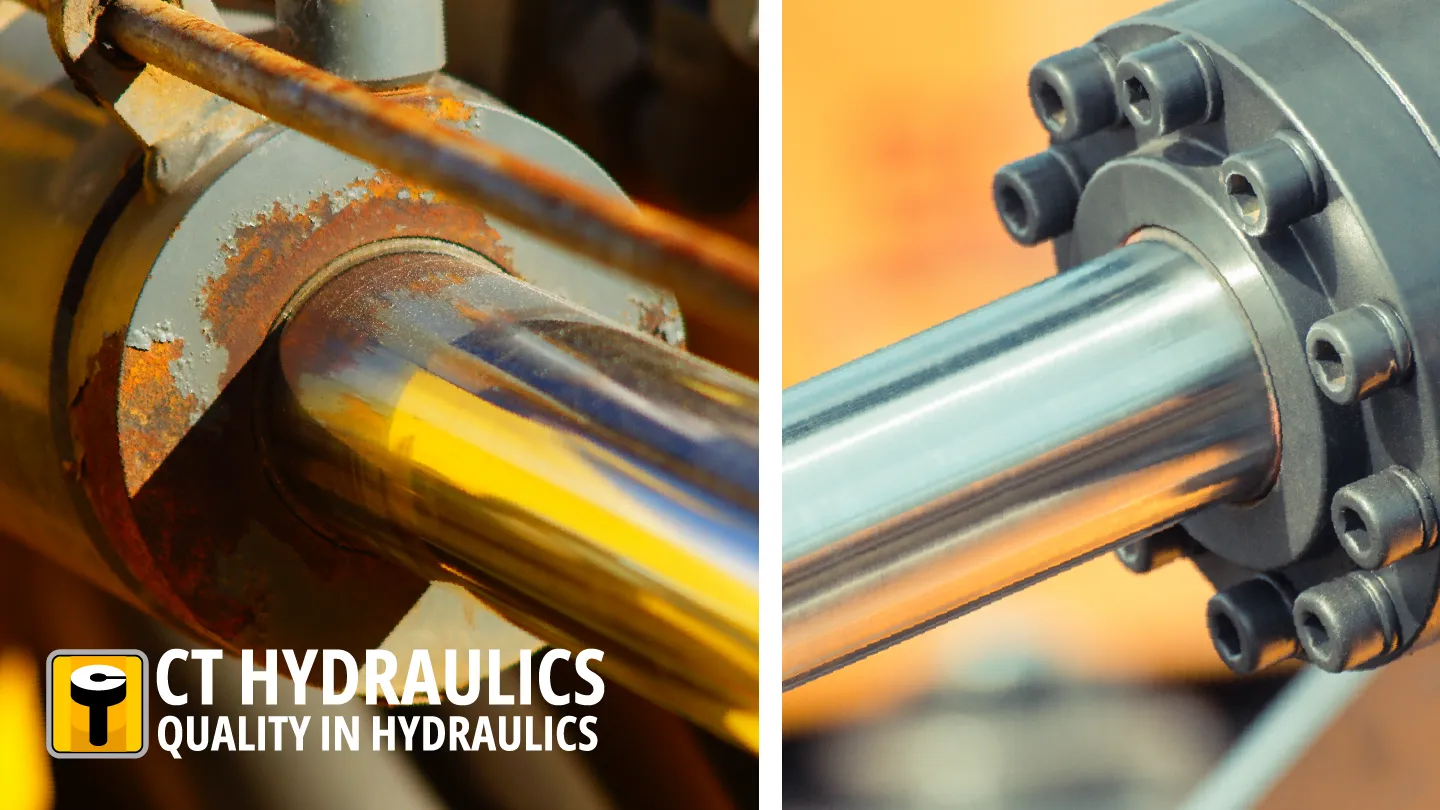
No mine or plant can afford to wait for a cylinder to be reconditioned. The CT Hydraulics Hydraulic Cylinder Parts Exchange programme puts a newly repaired exchange cylinder in your hands before your failed unit leaves the bench, so production continues while the damage is assessed, quoted, and the failed unit is reconditioned to OEM cylinder repair specifications. This technical guide explains the exchange process step by step, and why a component returned to like-new condition is ultimately the cheaper route than three weeks of standing plant.
The Real Cost of a Cylinder on the Bench
A hydraulic cylinder failure does not stop at the component. It stops the machine, and the machine is where the money is.
Every day that a truck, excavator, roof bolter or materials handling unit stands idle is a day of lost production that no repair invoice can recover. The cylinder itself is rarely the largest number on the page. For senior mine managers, plant engineers and fleet managers across Southern Africa, the exposure is not measured in parts at all. It is measured in tonnes not moved, shifts not completed, and contractual commitments not met.
The traditional repair route guarantees waiting. The cylinder is removed from site, joins a repair queue, is assessed, is quoted, is reconditioned, and only then returns. Nothing about the sequence is wrong in engineering terms, but every step of it happens while your asset is unavailable. That is the structural weakness the CT Hydraulics Hydraulic Cylinder Parts Exchange programme was built to remove.
How the CT Hydraulics Hydraulic Cylinder Parts Exchange Programme Works
The programme is deliberately simple, and every step is structured to keep your machine in service. The sequence runs as follows:
- You place the order. A single instruction to the CT Hydraulics team begins the exchange.
- We deliver the open order. A newly repaired cylinder, the exchange unit, is dispatched to you from our inventory of commonly used cylinders.
- You hand over the failed cylinder. Your broken unit is collected through our own external logistics fleet once the exchange cylinder is in place.
- You receive a repair quote. The collected cylinder is inspected, and the parts required to restore it are quoted before any work begins.
- We recondition to OEM cylinder repair specifications and invoice for the damage. The cylinder is returned to like-new condition, reconditioned to OEM specification. You are invoiced for the damage found on the cylinder you provided, not for the cylinder now running on your machine.
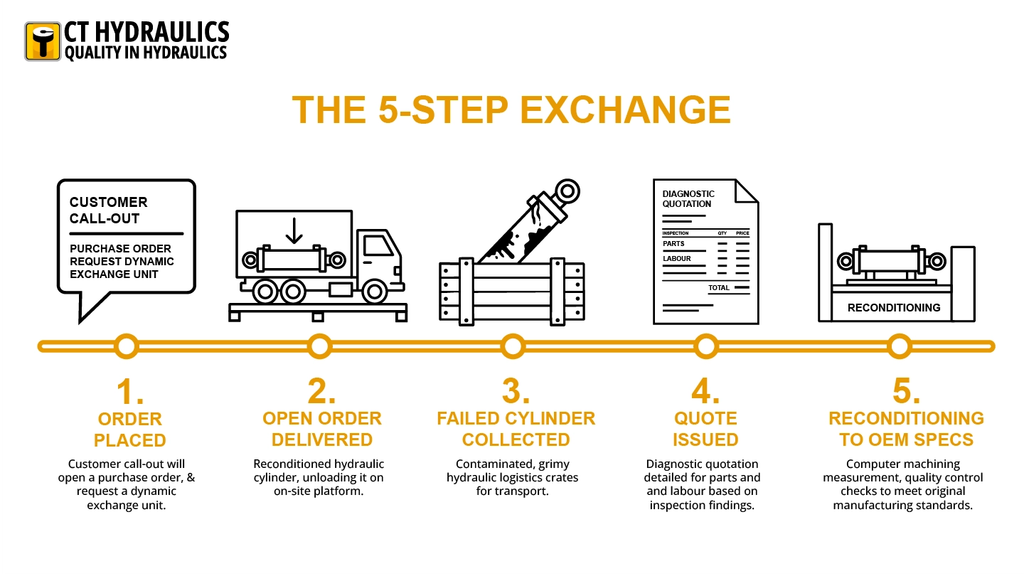
The consequence of that order of operations is the whole point. Because the replacement cylinder is already at work, the inspection, the quotation and the reconditioning all happen in the background. Your operation does not hold a bench slot to get back to full output. The Parts Exchange programme and the inventory of commonly used cylinders that supports it are set out in full on the CT Hydraulics offering page.
Why an Exchange Inventory Beats a Repair Queue
CT Hydraulics maintains an extensive inventory of commonly used hydraulic cylinders and cylinder components precisely so that an exchange can be immediate rather than aspirational. The families held in that inventory are the working equipment of Southern African heavy industry, the cylinders used on roof bolters, underground hauliers and earthmoving machinery. Identifying early signs of hydraulic cylinder wear and tear allows teams to replace failing units before catastrophic failure occurs.
Reconditioning is where an exchange programme either earns its reputation or loses it. Every exchange unit is rebuilt with a discipline that a rushed workshop cannot match: certified welding procedures, precision machining and honing in our own workshop, and chroming that restores both surface hardness and corrosion resistance. Every cylinder then undergoes five separate tests: pressure, leakage, stroke, force and efficiency, and ships with a detailed computer-generated report confirming its suitability for service. All manufactured and reconditioned cylinders carry a 6-month or 5,000-hour warranty.
That standard is not self-declared. CT Hydraulics is trusted by major OEMs for hydraulic support. When an exchange unit arrives on your site, it arrives reconditioned to OEM specification.
OEM Specification and the Whole-Life Calculation
A reconditioned cylinder is restored to like-new condition and to OEM specification wherever the OEM relationship provides for it. Achieving that depends on two things: the standard the rebuild is held to, and how it is verified.
CT Hydraulics reconditions to OEM specification. It is the distinction that separates a restoration from a working repair. When deciding between reconditioning vs. replacing hydraulic cylinders, achieving true OEM specifications is the key factor in whole-life cost. Components of unknown provenance are the quiet cause of repeat failures, because a cylinder is a tolerance-critical assembly and every internal component affects the behaviour of the others. When unverified seals, rods or end caps are introduced, the unit may run, but it will not run to specification, and it will not run for the same number of hours.
For price-sensitive operations, this is the calculation that matters. A cylinder that fails twice has not been repaired once. The whole-life cost of a properly rebuilt exchange unit, measured in uptime, in avoiding secondary damage to pumps and valves caused by contamination, and in the maintenance hours not spent removing and refitting the same machine, is consistently lower than the apparent saving on the invoice. Quality in Hydraulics is not a premium paid for its own sake. It is the cheapest way to keep a fleet working.
Where Parts Exchange Delivers Most Value
The programme is available across South Africa and Namibia, and it is most valuable where downtime is most expensive:
- Mining and earthmoving. Underground hauliers, roof bolters and earthmoving machinery across Gauteng and the Northern Cape mining belt, including Kathu.
- Materials handling and processing. Conveyor, loading and processing equipment where a single cylinder governs a whole line.
- Forestry. Harvesting and handling machinery operating in remote conditions that make turnaround time critical.
- Marine hydraulics. Offshore and vessel-based systems supported through our Windhoek and Swakopmund branches.
For operations running multiple identical units, the exchange model converts a repair problem into a maintenance strategy: units rotate through the programme on a planned basis instead of failing into it.
Secure Your Uptime With CT Hydraulics
Do not let a repair queue dictate your production schedule. Review the full Hydraulic Cylinder Parts Exchange programme and see how an exchange cylinder can be placed on your machine before your failed unit leaves site. Our team will assess your fleet, confirm the exchange units available for your equipment, and set the collection in motion. To discuss a Parts Exchange assessment for your operation, contact CT Hydraulics today.
Quality in Hydraulics.